Check your eligibility, prepare your resume and submit your details through our airport job application form.
π Apply for Airport Jobs in Australia
Looking for Airport Jobs in Australia 2026? Australiaβs aviation industry offers a wide range of jobs across passenger services, ground operations, check-in, baggage handling, customer service and other airport support areas.
Airports are busy workplaces where employees work closely with passengers, airline teams and ground handling staff. Depending on the position, the job may involve helping passengers at the terminal, supporting check-in and boarding, handling baggage or assisting with day-to-day airport operations.
Current airport vacancies in Australia show opportunities across different types of airport services. For example, Sydney-based listings include ground crew, passenger service, check-in and airport operations roles. However, the exact requirements depend on the employer and the position.
Airport work in Australia is not limited to one job title. Different employers recruit people for passenger-facing, operational and support positions. Your duties, qualifications and experience will depend on the specific vacancy.
Ground staff can work across passenger handling, airport services and other ground operations, depending on the role.
These positions can involve baggage movement, ramp support, aircraft turnaround activities and other operational tasks.
Passenger service employees may assist with check-in, boarding, flight information and passenger enquiries.
Customer service roles focus on helping travellers and providing professional assistance throughout their airport experience.
Airport jobs in Australia can be fast-paced and customer focused. Depending on the position, employees may work early mornings, evenings, weekends or public holidays.
Work rights are an important part of many Australian airport recruitment processes. Some current airport vacancies specify Australian citizenship, permanent residency or other legal working rights as part of their requirements.
Therefore, candidates should check the exact work-right requirements before applying. Do not assume that every airport employer offers visa sponsorship.
Eligibility varies from one position to another. Some roles may focus mainly on customer service, communication and reliability, while operational positions can have additional requirements such as physical capability, a driver licence, security checks or previous experience.
For example, current Australian airport vacancies can include requirements related to shift work, communication, computer skills, security checks and the legal right to work in Australia.
π Important: There is no single eligibility rule for all airport jobs in Australia. Always check the current vacancy, employer requirements, work rights and job conditions before submitting an application.
Ground Staff Jobs in Australia 2026 cover a range of airport support positions. Depending on the employer, ground staff may work with passengers, airline teams, baggage operations or other airport service areas.
The exact duties are different from one vacancy to another. Therefore, candidates should always read the individual job description instead of assuming that every ground staff position has the same responsibilities.
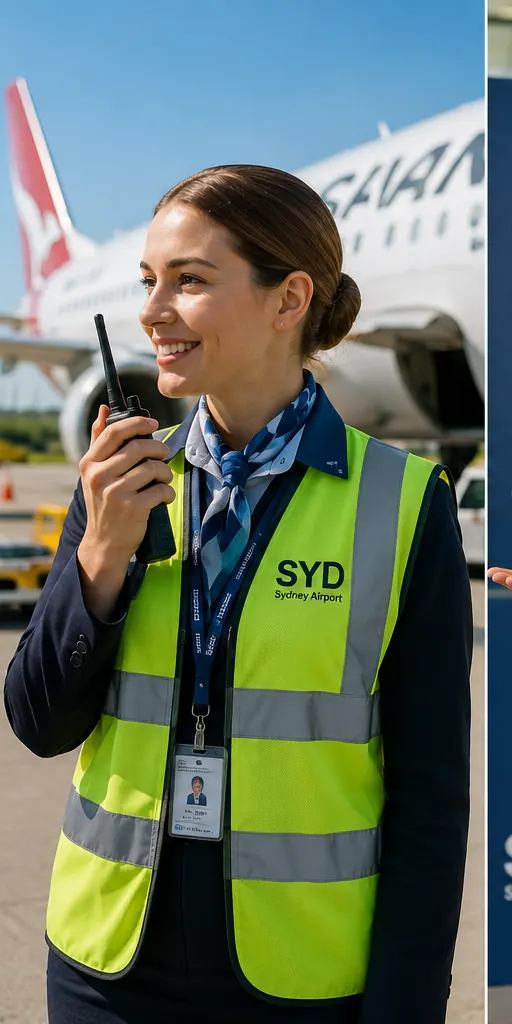
Ground staff duties depend on the position and employer. In passenger-facing roles, employees may help travellers at the terminal, while operational roles can involve baggage, ramp or aircraft turnaround support.
Check-in roles are generally customer-facing positions. Employees may assist travellers with the check-in process, provide information and support passengers before they proceed towards security and the boarding area.
Good communication and customer service are particularly useful in these roles because airport staff may deal with travellers from different backgrounds throughout the day.
Helping passengers with the applicable check-in process and directing them to the correct airport service area.
Depending on the position, staff may assist with baggage procedures or coordinate with the relevant airport team.
Passenger service staff may assist with boarding-related procedures according to airline requirements.
Answering general passenger questions and providing clear, professional assistance.
Ramp and baggage positions are different from front-counter customer service roles. They can involve practical work around airport ground operations and may require candidates to meet specific physical, safety, security or licensing requirements.
For example, some positions can involve baggage handling, equipment operation or supporting aircraft turnaround activities. The exact duties should always be confirmed from the current employer advertisement.
Passenger service roles focus on helping travellers during different stages of their airport journey. Depending on the position, employees may provide information, assist with check-in or boarding, and help direct passengers to the appropriate service area.
Customer service is an important part of many airport jobs. Employees can be expected to communicate with passengers, understand their questions and provide appropriate assistance within the rules of the airline or airport.
In addition, customer service employees may need to work closely with colleagues from different departments. Good teamwork can therefore be just as important as individual communication skills.
π Important: Airport job titles can vary between Australian employers. A role called βGround Staffβ at one company may have different duties from a similarly named position at another company. Always check the current job description, required qualifications, work rights and employment conditions before applying.
The eligibility for Airport Jobs in Australia 2026 depends on the employer, airport, job title and level of responsibility. There is no single qualification that applies to every airport position.
Some entry-level passenger service roles may focus on communication, customer service and reliability, while operational positions can have additional requirements. Therefore, always check the current job advertisement before applying.
Depending on the vacancy, an employer may look for some of the following requirements:
Some entry-level airport positions may accept applicants with a secondary school qualification equivalent to Year 12. However, this is not a universal rule. Each employer can set its own education requirements.
If you have completed Year 12 or an equivalent qualification, check whether the specific vacancy accepts that level of education. In addition, customer service, communication and computer skills can be useful for many passenger-facing positions.
Some entry-level vacancies may accept applicants with Year 12 or an equivalent secondary qualification.
Basic digital and computer skills can be useful in customer service and airport administration roles.
Clear spoken communication can be important when helping passengers and working with airport teams.
Patience, professionalism and a helpful attitude can be valuable in passenger-facing airport roles.
Graduates can apply for airport roles where their education matches the requirements of the position. Some jobs may value business, aviation, hospitality, administration or other relevant backgrounds, while many entry-level positions can have different requirements.
However, having a degree does not automatically guarantee selection. The employer may also assess communication, experience, customer service ability and other job-specific requirements.
Yes, some entry-level airport vacancies may be suitable for people without previous airport experience. Freshers should focus on vacancies where previous experience is not listed as mandatory.
There is no single maximum age limit for every airport job in Australia. Age-related requirements can depend on the position, employer and applicable workplace rules.
Therefore, candidates should check the specific vacancy rather than relying on a general age limit found online. Some jobs may also have requirements connected with licensing, security, physical duties or other job-specific conditions.
English communication can be important for many Australian airport jobs, particularly positions that involve direct contact with passengers. Employees may need to understand instructions, answer questions and communicate with colleagues.
The required level of English can vary by job. For example, a passenger service position may require stronger spoken communication than a role with limited customer interaction.
Candidates must have the appropriate legal right to work in Australia for the position they are applying for. Depending on the vacancy, an employer may specify Australian citizenship, permanent residency or another acceptable work-right status.
Importantly, work rights and visa conditions can vary. Do not assume that an airport employer provides visa sponsorship unless the vacancy specifically says so.
Previous airport experience is not required for every position. Some entry-level jobs may provide workplace training after recruitment, while experienced or specialised roles can have more specific requirements.
As a result, freshers should look for advertisements that clearly state whether previous experience is required or preferred.
π Important: Australian airport employers can have different requirements for education, work rights, security checks, licences, experience and shift availability. Always use the current employer advertisement as the final eligibility reference.
The salary for Airport Jobs in Australia 2026 can vary significantly depending on the job title, employer, location, experience, employment arrangement and responsibilities. There is no single salary that applies to every airport worker.
Ground staff, passenger service, check-in, baggage, ramp and customer service roles can all have different pay rates. Therefore, candidates should always check the current job advertisement and employment conditions before comparing salaries.
Different airport positions can have different pay structures. A passenger service employee may have a different rate from a baggage handler, ramp worker or specialised operational employee.
Pay can depend on the employer, customer service duties, experience and roster arrangements.
Check-in and passenger-facing roles can have different employment conditions depending on the airline or contractor.
Baggage-related positions may involve physical work and can have different roster and pay arrangements.
Ramp jobs can involve operational responsibilities, safety requirements and role-specific training.
Many airport operations run beyond standard office hours. Depending on the role and airport, employees may be rostered for early mornings, evenings, weekends or public holidays.
Because of this, candidates should check the roster and working-hour requirements before accepting a job. Shift arrangements can differ between employers and positions.
Australian employment conditions can include different pay arrangements depending on the applicable award, enterprise agreement, employment contract and roster. Additional rates may apply in some circumstances.
However, you should not assume that every airport job automatically provides the same penalty rates. Always check the applicable employment conditions for the specific position.
Australian airport employers can advertise different types of employment. The hours, pay structure and conditions can vary depending on whether a position is full-time, part-time or casual.
Employee benefits depend entirely on the employer and the employment arrangement. Some organisations may offer benefits in addition to ordinary pay, while others may have different conditions.
Depending on the employer and applicable employment conditions, benefits may include:
Before applying for an airport job, look for the salary or pay information in the official vacancy. If the advertisement does not provide a clear figure, check the employment conditions and ask the employer for clarification during the recruitment process.
Most importantly, compare the complete employment package rather than looking at the advertised hourly rate alone. Working hours, employment type, roster and applicable conditions can all affect the overall value of a job.
π Important: Salary figures and employment conditions can change over time and differ between Australian employers. Do not treat a general salary estimate as a guaranteed offer. Always verify the current pay rate, employment type, roster and applicable conditions in the employer's latest job advertisement or employment contract.
If you are applying for Airport Jobs in Australia 2026, it is useful to have your basic documents ready before starting an application. The exact documents can vary depending on the employer, airport, job title and recruitment process.
Therefore, do not assume that every Australian airport job requires exactly the same documents. Always check the current vacancy for the employer's specific requirements.
Your resume should be clear, accurate and easy for a recruiter to read. Focus on experience and skills that are relevant to the position you are applying for.
For example, if you are applying for a passenger service position, customer service, communication, teamwork and problem-solving experience can be useful to highlight.
Include your current contact information so the employer can reach you during the recruitment process.
List relevant education, training and qualifications that match the requirements of the position.
Mention relevant employment history, responsibilities and customer-facing or operational experience.
Highlight communication, customer service, teamwork, computer skills and other relevant abilities.
Many Australian employers need to confirm that a candidate has the legal right to work in Australia. The type of evidence required can depend on your circumstances and the employer's recruitment process.
Importantly, never provide false information about your visa or work status. If a vacancy specifies Australian citizenship, permanent residency or particular work rights, make sure you meet that requirement before applying.
Airport environments have additional security requirements, and some roles may require background checks or aviation security clearances. The exact checks depend on the position, airport and employer.
Not every airport job requires a special licence. However, some operational positions may have additional requirements depending on the duties involved.
For example, certain driving, equipment, security or specialised operational positions can require specific licences, training or authorisations.
Before you submit an application, compare your documents with the job advertisement. Check the spelling of your name, contact details, qualifications and work history.
In addition, make sure any required documents are uploaded in the format requested by the employer. A complete and accurate application can make the recruitment process easier for both the candidate and the employer.
π Important: Document requirements vary between Australian airport employers and job roles. Security checks, licences, work-right evidence and other requirements may apply depending on the position. Always follow the latest instructions provided by the employer.
The selection process for Airport Jobs in Australia 2026 can vary between airlines, airport operators, ground handling companies and other employers. Some positions may involve only application screening and an interview, while others can include additional assessments or security requirements.
Therefore, candidates should read the complete vacancy information and follow the employer's recruitment instructions carefully.
Submit your resume and application details through the employer's advertised recruitment channel.
The recruiter may review your qualifications, experience, work rights and suitability for the position.
Shortlisted candidates may be invited to a phone, video or face-to-face interview.
Some positions may include additional assessments related to communication, customer service or job-specific skills.
Depending on the role, identity, background, work rights and aviation security requirements may be checked.
Successful candidates may receive an employment offer and information about the next steps before commencing work.
Airport interviews can focus on your communication, customer service skills, reliability, teamwork and understanding of the position. The questions will depend on the specific job and employer.
Read the advertised responsibilities carefully before the interview. Think about how your previous experience and skills relate to the position.
When answering behavioural questions, use real examples from work, study, volunteering or other relevant situations. For example, you can explain how you helped a customer or solved a problem as part of a team.
Speak clearly and answer questions directly. Passenger-facing airport roles can involve regular communication with travellers and colleagues.
Airport operations can run outside normal office hours. Depending on the position, you may need to work early mornings, evenings, weekends or public holidays.
Before accepting an offer, check the roster, working hours and employment conditions so you understand what the position involves.
Some airport roles require additional aviation security checks or clearances because employees may need access to secure areas of an airport. The exact requirements depend on the position and the relevant Australian aviation security rules.
Importantly, completing an application does not automatically mean that a candidate will receive security clearance or a job offer.
π Important: Every Australian airport employer can use a different recruitment process. Interview stages, assessments, security checks and onboarding requirements may vary by job and employer. Always follow the latest instructions provided by the recruiting organisation.
If you want to apply for Airport Jobs in Australia 2026, start by finding a vacancy that matches your skills, education, work rights and availability. Read the complete job description before submitting your application.
Australian airport vacancies can be advertised directly by airlines, airport operators, ground handling companies, recruitment agencies and other aviation service providers. Therefore, check who the actual employer is before applying.
Search for an airport role that matches your experience, skills, work rights and preferred location.
Check qualifications, work rights, experience, licences, shift availability and other job-specific requirements.
Update your CV so that your relevant experience and skills are easy for the recruiter to understand.
Enter your personal, education, employment and other requested information accurately.
Upload your resume and any requested documents in the format specified by the employer.
Review your application before submitting it and keep your contact details available for recruitment updates.
Many airport vacancies use an online recruitment system. You may be asked to create a candidate profile, upload a resume and answer questions about your work history and availability.
Before submitting, check every field carefully. Your name, email address, phone number, employment history and work-right information should be accurate and consistent.
Before submitting your details, identify the company advertising the position. Check the employer's name, job location, position title and recruitment instructions.
In addition, make sure the job advertisement clearly explains what the position involves. If an advertisement makes unrealistic promises about guaranteed employment or unusually high earnings without explaining the role, take extra care and verify the information.
One of the most important checks for international applicants is whether they have the legal right to work in Australia for the advertised position.
Some employers may require Australian citizenship, permanent residency or another specific work-right status. Do not assume that every airport employer provides visa sponsorship.
If you are new to the airport industry, look for entry-level vacancies where previous airport experience is not listed as mandatory. Customer service, hospitality, retail, administration or other relevant experience can sometimes help demonstrate transferable skills.
Be careful with unsolicited job offers and recruiters who ask for sensitive information or money before explaining the recruitment process. Always verify the employer and vacancy through a reliable source.
Never share your banking password, PIN, one-time security code or other confidential financial information with a recruiter.
π Important: Application procedures differ between Australian airlines, airports, contractors and recruitment companies. Always follow the current instructions provided by the actual employer or authorised recruitment provider.
Check your eligibility, prepare your resume and submit your details through the airport job application form.
π Apply for Airport Jobs in AustraliaStarting with an airport job can give you practical experience in customer service, ground operations, passenger handling or other areas of the aviation industry. Your future career path will depend on your employer, performance, qualifications, experience and available opportunities.
Over time, employees may choose to build experience in a particular area or apply for other suitable positions within aviation, depending on their skills and eligibility.
Experience in passenger-facing work can help build customer service, communication and airport operations skills.
Employees can develop experience handling passenger enquiries, check-in procedures and service-related tasks.
Ground operations can provide practical experience in baggage handling, aircraft turnaround and team coordination.
With relevant experience and skills, employees can explore other suitable aviation and airport support positions.
Airport employers can look for different skills depending on the position. Strong communication, reliability and teamwork are useful across many customer-facing and operational roles.
Airports can be busy and sometimes stressful environments for travellers. Employees may need to answer questions, provide directions and deal with passengers who are confused, delayed or frustrated.
For this reason, patience and professional communication can be valuable qualities for passenger-facing airport jobs.
If you have no previous airport experience, you can still prepare yourself for suitable entry-level positions. Start by improving your resume and identifying transferable skills from school, retail, hospitality, administration, volunteering or other work.
Requirements vary between employers, but many airport roles involve working with people, following procedures and operating safely in a busy environment.
Relevant training can be useful when it matches the requirements of the position. The value of a particular course depends on the job and employer, so candidates should check the vacancy before paying for any training program.
In addition, practical customer service, communication and workplace skills can be valuable even when a specific course is not required.
A long-term aviation career usually develops through a combination of experience, skills, training and suitable opportunities. You do not need to decide your entire career path before applying for your first airport position.
Instead, focus on gaining relevant experience, learning from the role and developing skills that can support your future career goals.
π Important: Career progression is not guaranteed and depends on the employer, performance, qualifications, experience and available vacancies. Always check the requirements for the next position you want to pursue.
If you meet the requirements of a suitable vacancy, prepare your resume and submit your application with accurate information.
π Apply for Airport Jobs in AustraliaAirport jobs include a wide range of passenger service, ground operations, check-in, baggage, ramp, customer service and other aviation support positions. The duties depend on the employer and specific job.
Some entry-level positions may accept candidates without previous airport experience. Freshers should look for vacancies where previous experience is not listed as mandatory and should highlight transferable skills such as customer service and communication.
International applicants can only work in Australia when they have the appropriate legal work rights for the position. Some employers may have specific citizenship, residency or visa requirements.
Some entry-level vacancies may accept Year 12 or an equivalent qualification, but there is no single education requirement for all airport jobs. Always check the current vacancy before applying.
English communication can be important, especially in passenger-facing positions. The required level depends on the role, employer and responsibilities.
Some airport positions can involve early morning, evening, weekend or public holiday shifts. Roster arrangements depend on the employer and job.
Pay varies by job title, employer, location, employment type, experience and applicable employment conditions. Candidates should check the current vacancy or employment offer for the actual rate.
Depending on the vacancy, you may need a resume, identity documents, evidence of work rights, qualifications, licences, references or information required for security checks.
Not always. Some entry-level jobs may be suitable for people without previous airport experience, while specialised roles can require relevant experience or qualifications.
Find a suitable vacancy, check the eligibility and work-right requirements, prepare your resume and submit the application through the relevant recruitment process. Make sure all information you provide is accurate.
Always verify who is recruiting and read the job information carefully before providing personal information.
If you have checked your eligibility and are interested in airport ground staff, passenger service, check-in, customer service or other suitable airport roles, you can submit your details through the application form.
π Apply Now β Airport Job Application FormFinal Words: Airport Jobs in Australia can offer opportunities across passenger services, ground operations, baggage, check-in and other aviation support areas. The right role depends on your skills, qualifications, work rights and the employer's current requirements. Take your time, verify the vacancy and submit accurate information when applying.
π Disclaimer: This article is provided for general information and should not be treated as a guaranteed job offer, recruitment promise or immigration advice. Airport vacancies, salaries, eligibility requirements and employment conditions can change. Always verify the latest information with the relevant Australian employer or authorised recruitment provider before making an employment decision.